De-Risking Navigation for a National Education Platform

De-Risking Navigation for a National Education Platform

Validating information architecture decisions with real user evidence

Validating information architecture decisions with real user evidence

Company

Government (NZ)

ROLE

UX/UI Designer

duration

3 Months
KEY IMPACT

✓ Provided high-confidence evidence to validate and refine the site's IA across five distinct user groups

✓ Provided high-confidence evidence to validate and refine the site's IA across five distinct user groups

Reduced navigation friction by clarifying mega-menu pathways, supporting faster and smoother content discovery

Reduced navigation friction by clarifying mega-menu pathways, supporting faster and smoother content discovery

✓ Enabled the content team to make navigation decisions backed by data, rather than assumptions

✓ Enabled the content team to make navigation decisions backed by data, rather than assumptions

Reduced long-term navigation risk by restructuring the top navigation to accommodate future Level-1 content growth

Reduced long-term navigation risk by restructuring the top navigation to accommodate future Level-1 content growth

TL;DR

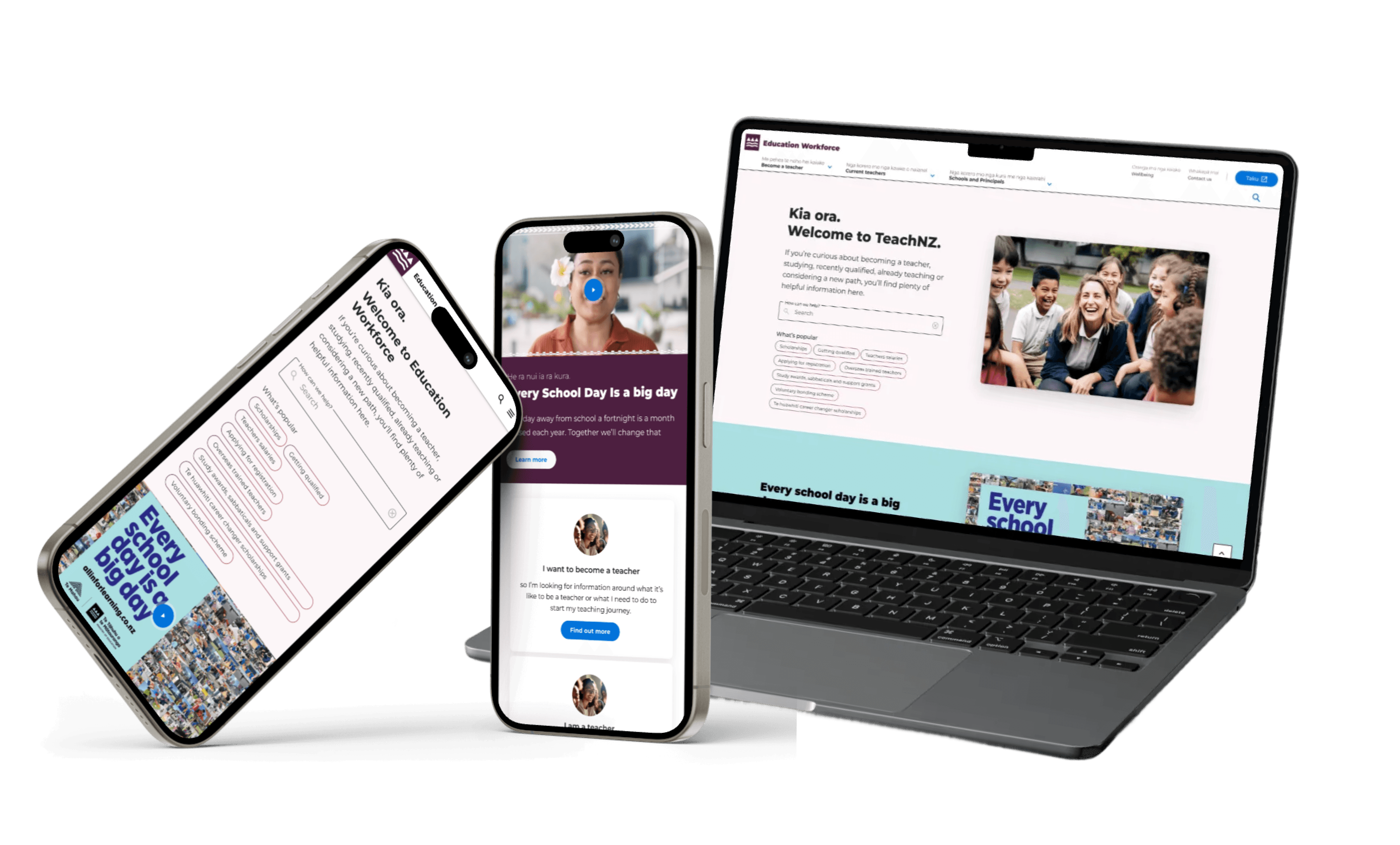
The Education Workforce website was created to replace the legacy TeachNZ platform, with the goal of making education-related information easier to find, understand, and keep up to date for a wide range of users.

The Education Workforce website was created to replace the legacy TeachNZ platform, with the goal of making education-related information easier to find, understand, and keep up to date for a wide range of users.

Problem

By the time I joined the project, the initial site design had already been completed and implementation was about to begin. However, questions remained about whether the information architecture truly reflected how real users looked for information.


Early IA tests were conducted but used non-representative participants, which limited confidence in the results. As a result, the team faced uncertainty about whether the existing structure would support clear navigation once the site went live.

By the time I joined the project, the initial site design had already been completed and implementation was about to begin. However, questions remained about whether the information architecture truly reflected how real users looked for information.

Early IA tests were conducted but used non-representative participants, which limited confidence in the results. As a result, the team faced uncertainty about whether the existing structure would support clear navigation once the site went live.

To reduce the risk of shipping an unvalidated structure, the team decided to conduct a second round of IA testing with representative user groups.

View Website

View Website

View Website

MY ROLE

  1. Lead structured information architecture testing

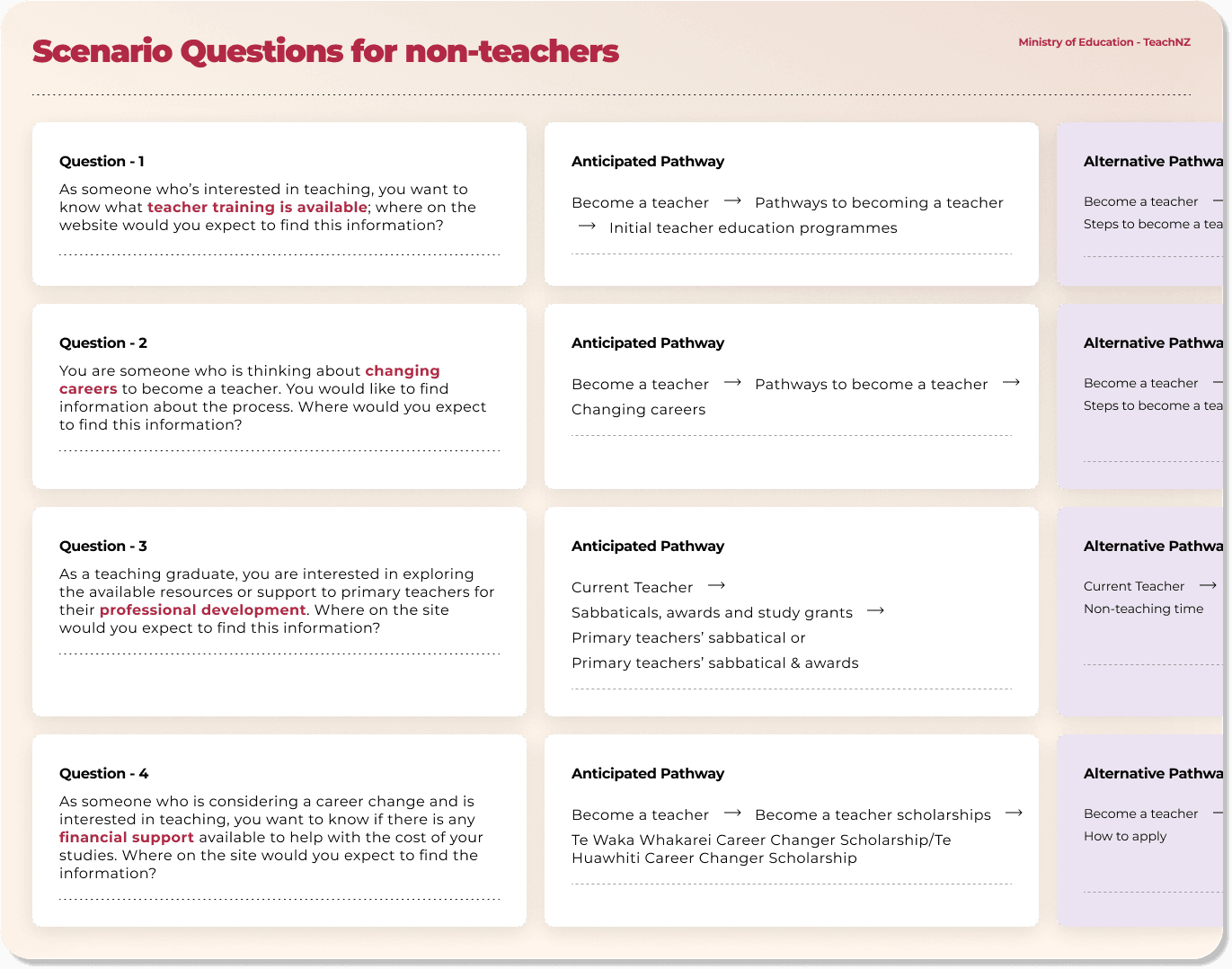
    Conducted tree test across five distinct user segments, each with tailored scenarios representing their specific information needs.

  1. Lead structured information architecture testing

    Conducted tree test across five distinct user segments, each with tailored scenarios representing their specific information needs.

  1. Analysis and translate IA insights into design guidance

    Over 300 participants generated task success and find-ability metrics.

  1. Analysis and translate IA insights into design guidance

    Over 300 participants generated task success and find-ability metrics.

  1. Support UX/UI iteration alongside implementation

    Worked closely with cross-functional Agile delivery team to ensure design fidelity and consistent visual language from prototype through to release.

  1. Support UX/UI iteration alongside implementation

    Worked closely with cross-functional Agile delivery team to ensure design fidelity and consistent visual language from prototype through to release.

  1. Execute UX quality assurance and accessibility validation

    Conducted user acceptance testing (UAT) and accessibility reviews to ensure the final experience met usability and inclusive design expectations for diverse user needs.

  1. Execute UX quality assurance and accessibility validation

    Conducted user acceptance testing (UAT) and accessibility reviews to ensure the final experience met usability and inclusive design expectations for diverse user needs.

Outcome

As content was still being developed, I supported the content team by translating IA testing results into clear guidance on the site information structure.

In parallel with the website build, I also made targeted UI iterations to ensure the interface could adapt to these evolving decisions while preserving clarity and scalability.

IA Testing

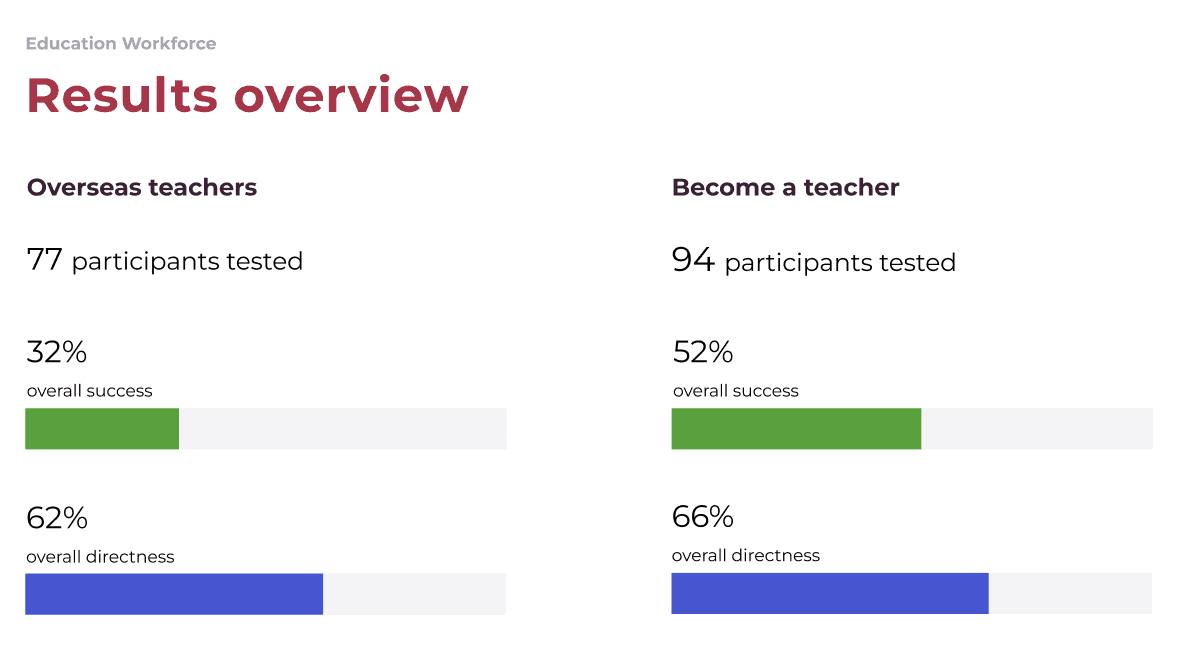
Over 300 validated data points provided actionable confidence for structural and language changes.

Over 300 validated data points provided actionable confidence for structural and language changes.

Tree testing results by audience

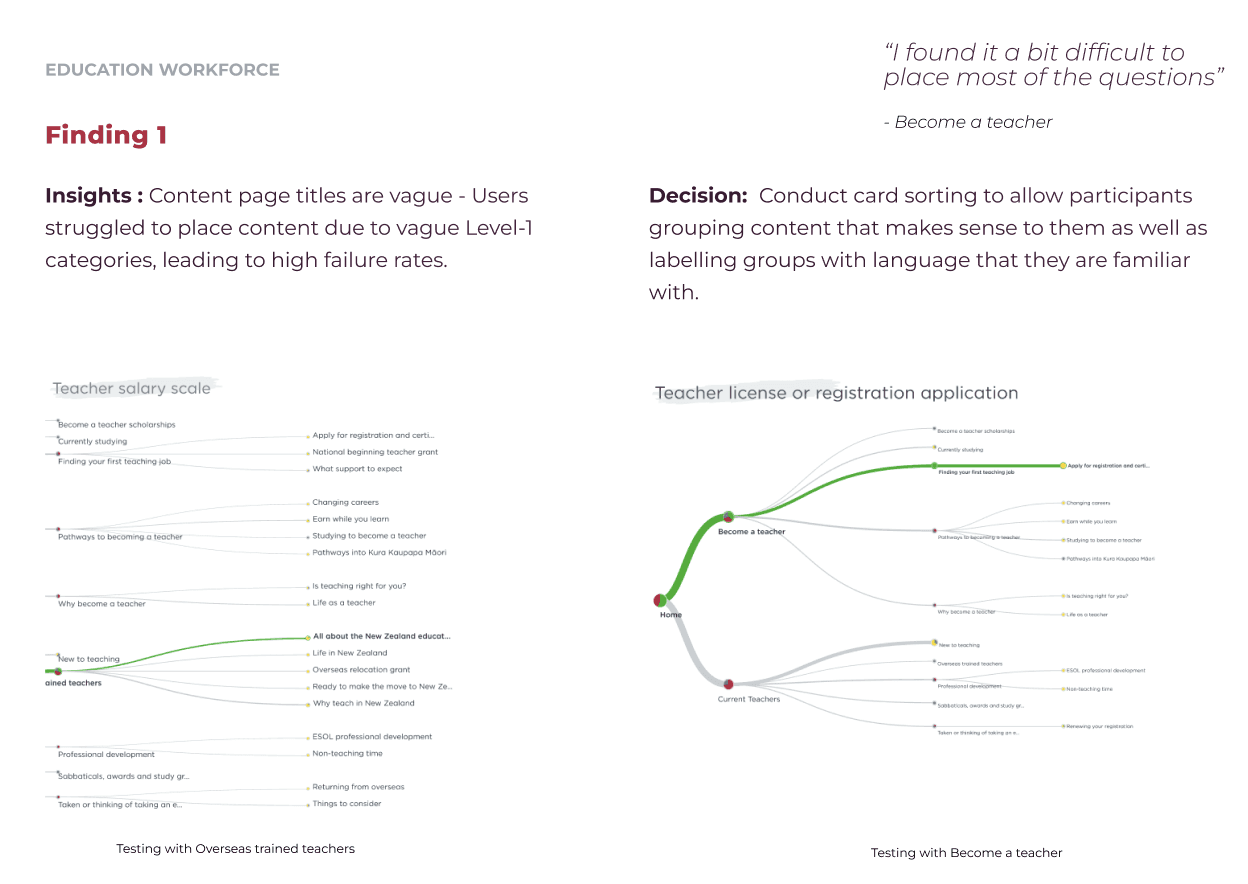
Structure navigation failure points

Navigation Iteration

Redesigned the top navigation to accommodate the new site name and support future Level-1 content growth

Redesigned the top navigation to accommodate the new site name and support future Level-1 content growth

Redesigned the top navigation to accommodate the new site name and support future Level-1 content growth

Before

AFTER

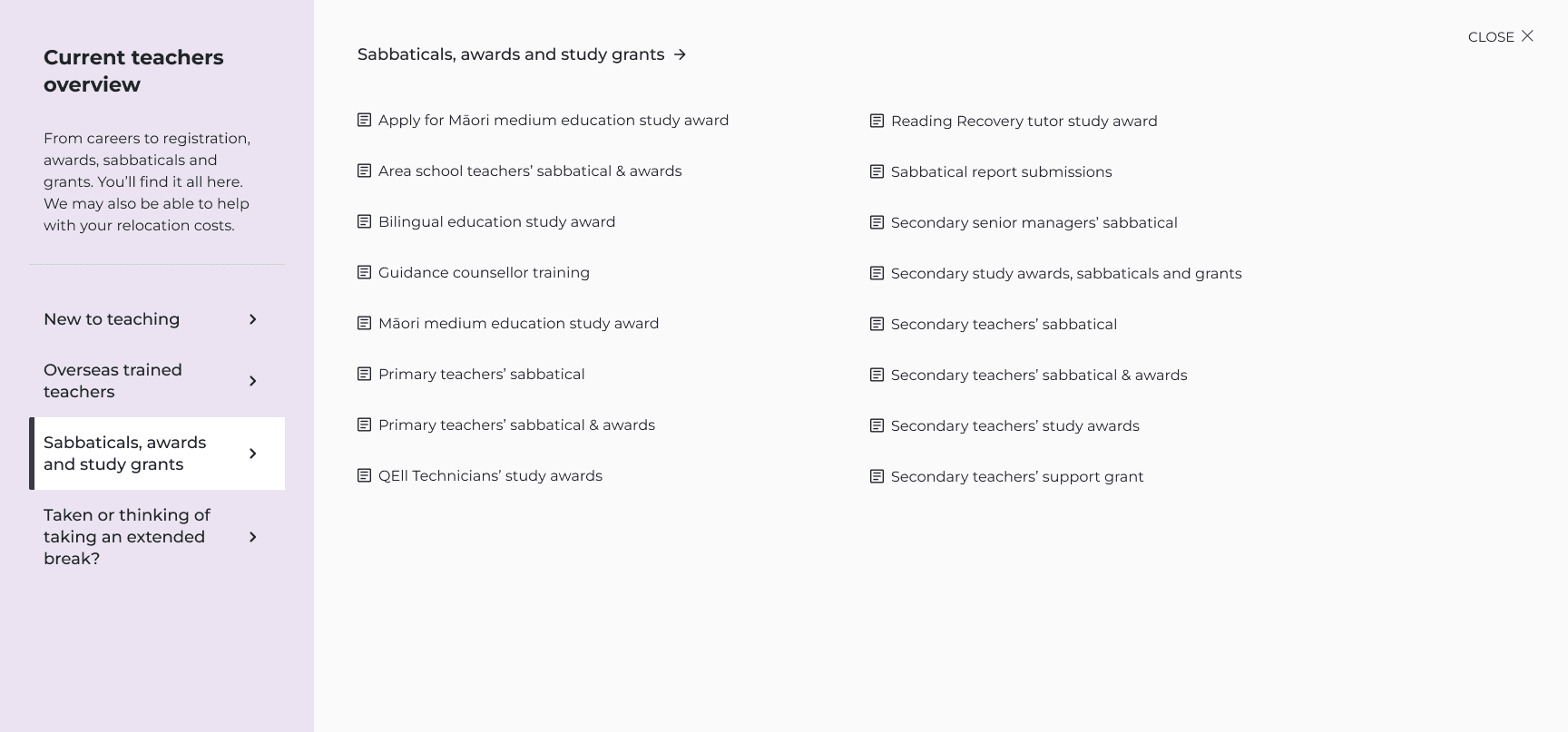
Mega-menu Iteration

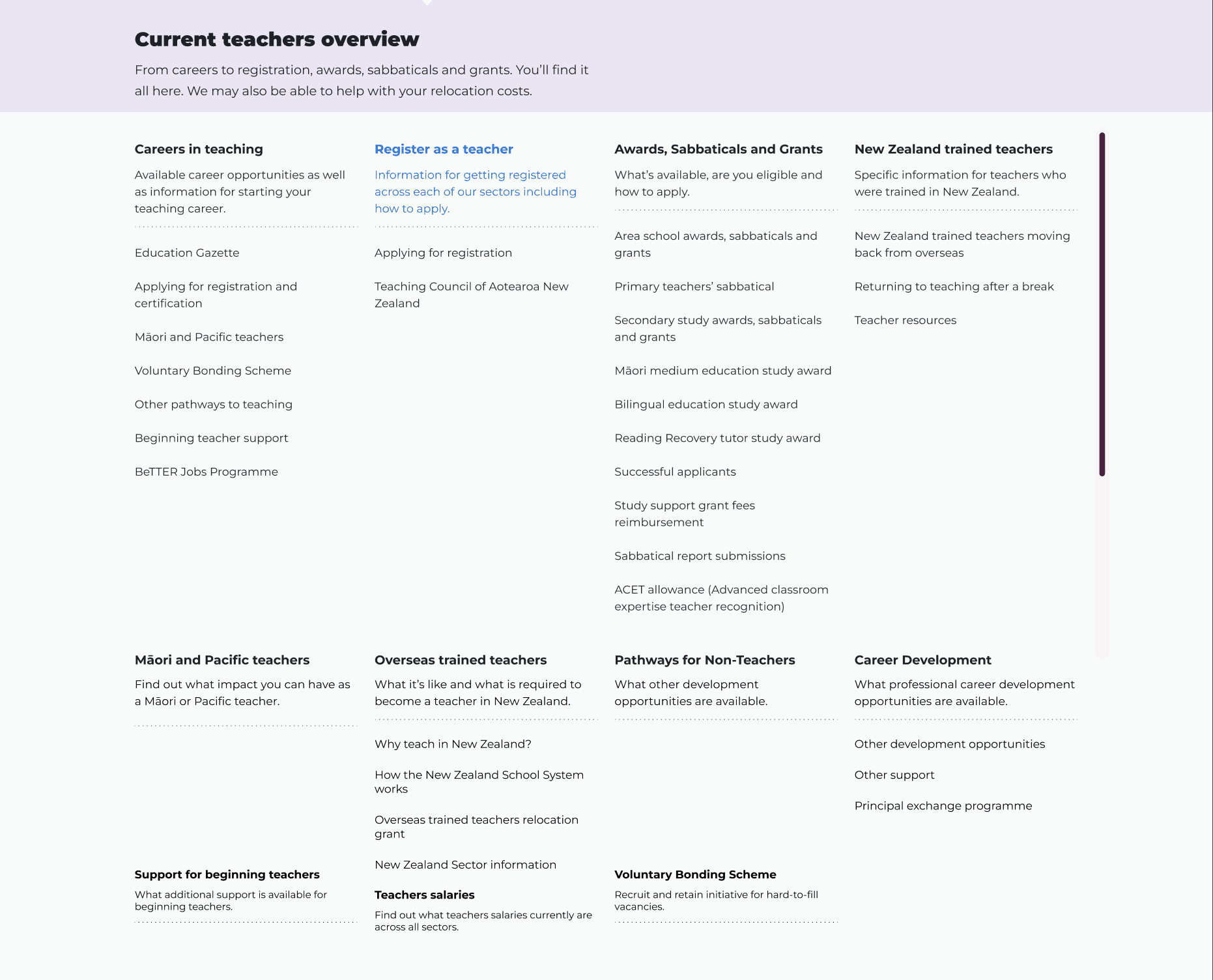
Refined the maga-menu to improve way-finding, reduce cognitive load, and support faster information discovery

Refined the maga-menu to improve way-finding, reduce cognitive load, and support faster information discovery

Before

Before

Constraints

Two rounds of tree testing with 5 user groups produced large datasets. While the first analysis established a solid reporting result, the second round needed to be completed with half the time available, this created pressure on me to deliver insights quickly without sacrificing quality.

Two rounds of tree testing with 5 user groups produced large datasets. While the first analysis established a solid reporting result, the second round needed to be completed with half the time available, this created pressure on me to deliver insights quickly without sacrificing quality.

Two rounds of tree testing with 5 user groups produced large datasets. While the first analysis established a solid reporting result, the second round needed to be completed with half the time available, this created pressure on me to deliver insights quickly without sacrificing quality.

Response:

To manage this, I prioritised tasks for the week, broke the analysis into clearly defined tasks, and onboarded additional support using the previously established workflow. This allowed us to work in parallel and delivered clear, actionable insights on time.

Next Step

To continue reducing navigation risk post-launch, the team could introduce ongoing analytics to monitor real-world navigation patterns and combine this with qualitative user feedback where available. This would ensure future iterations is supported by observed behaviour rather than assumptions.

thanks for stopping by

©2025 by Emma Wang

thanks for stopping by

©2025 by Emma Wang

thanks for stopping by

©2025 by Emma Wang