Company
Government (NZ)
ROLE
UX/UI Designer
duration
2 Months (Discovery → Concept Delivery for Validation)
KEY IMPACT
CHALLENGES
DISCOVERY
Understanding What Teachers Experienced
By the time I joined the project, 50+ schools had gone through trials with the manual version of the phonics assessment material. I analyzed their feedback to understand where the materials failed in real classroom conditions.
The Problem
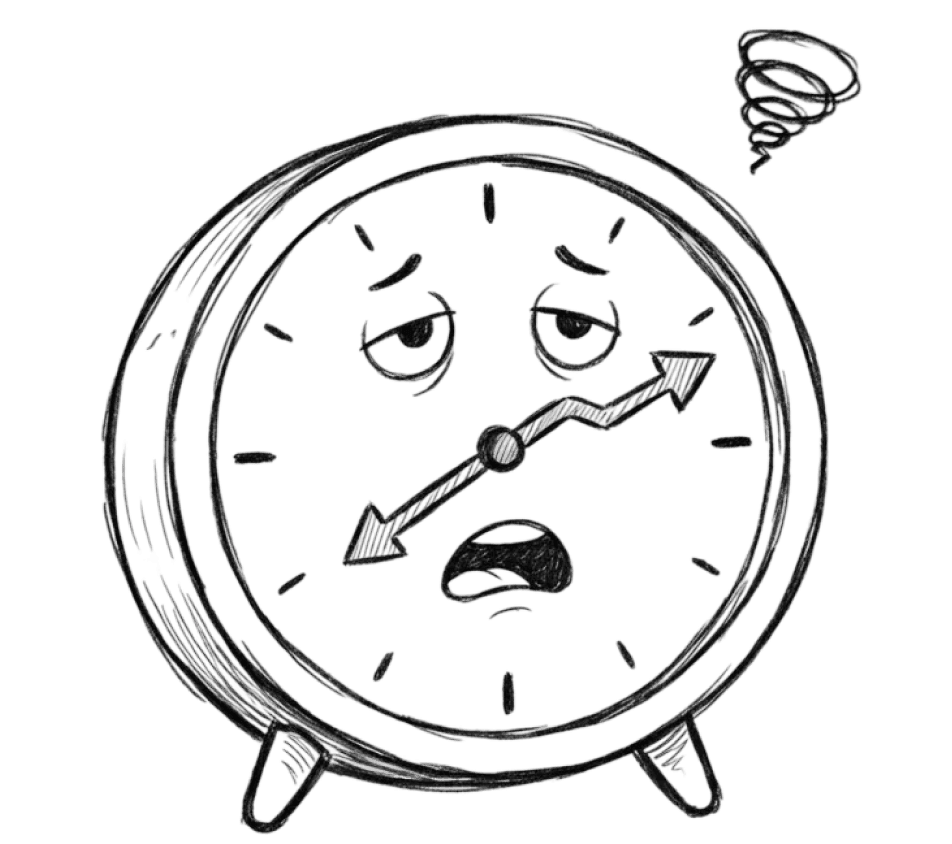
Test length and difficulty caused student frustration
Why?
Extended testing time created anxiety, especially for younger or less proficient students, leading some to refuse completion and producing inaccurate results.
Image distraction

Why?
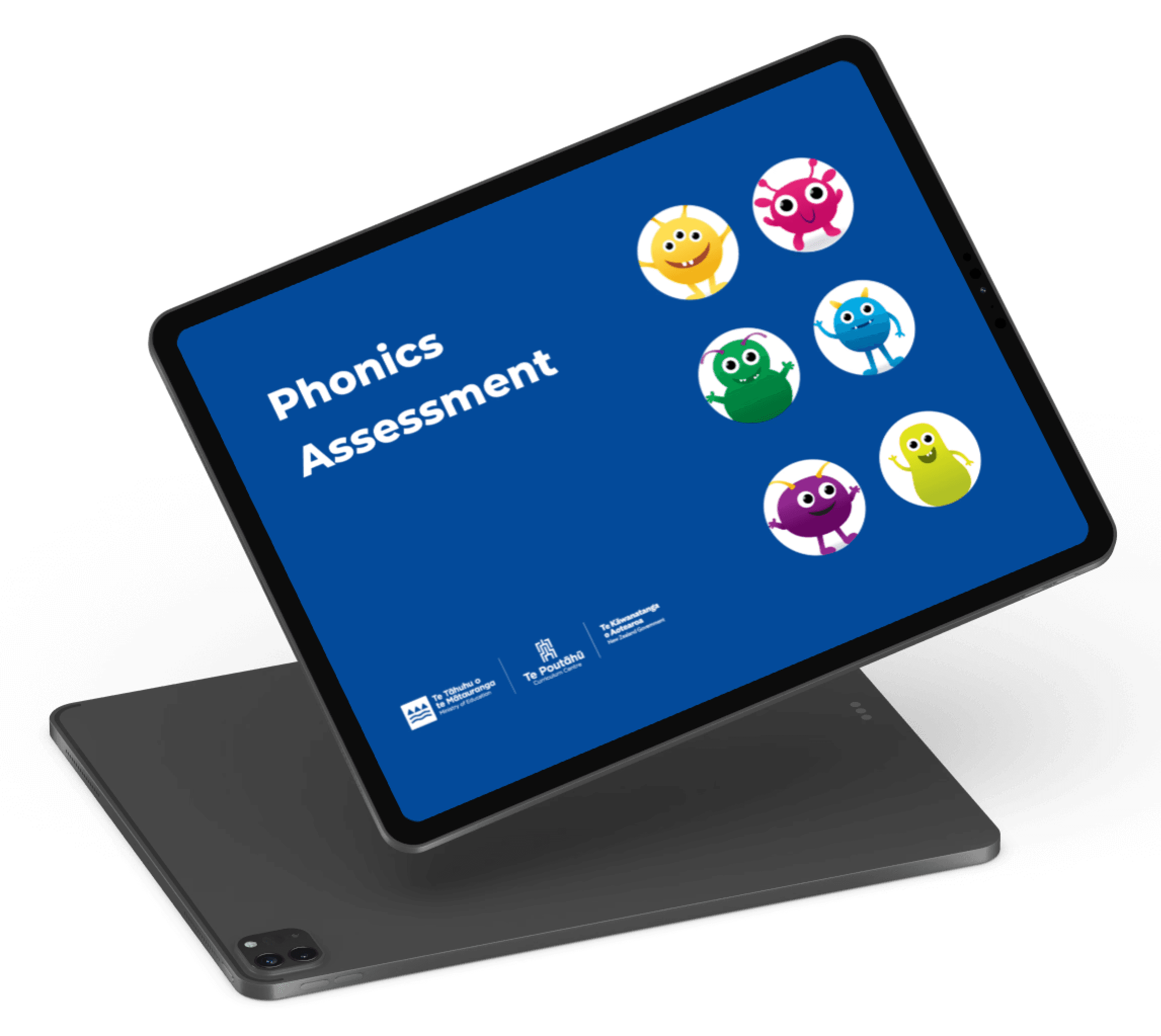
Alien images from original version distracted younger students, leading to results that didn't reflect their actual phonic skills.
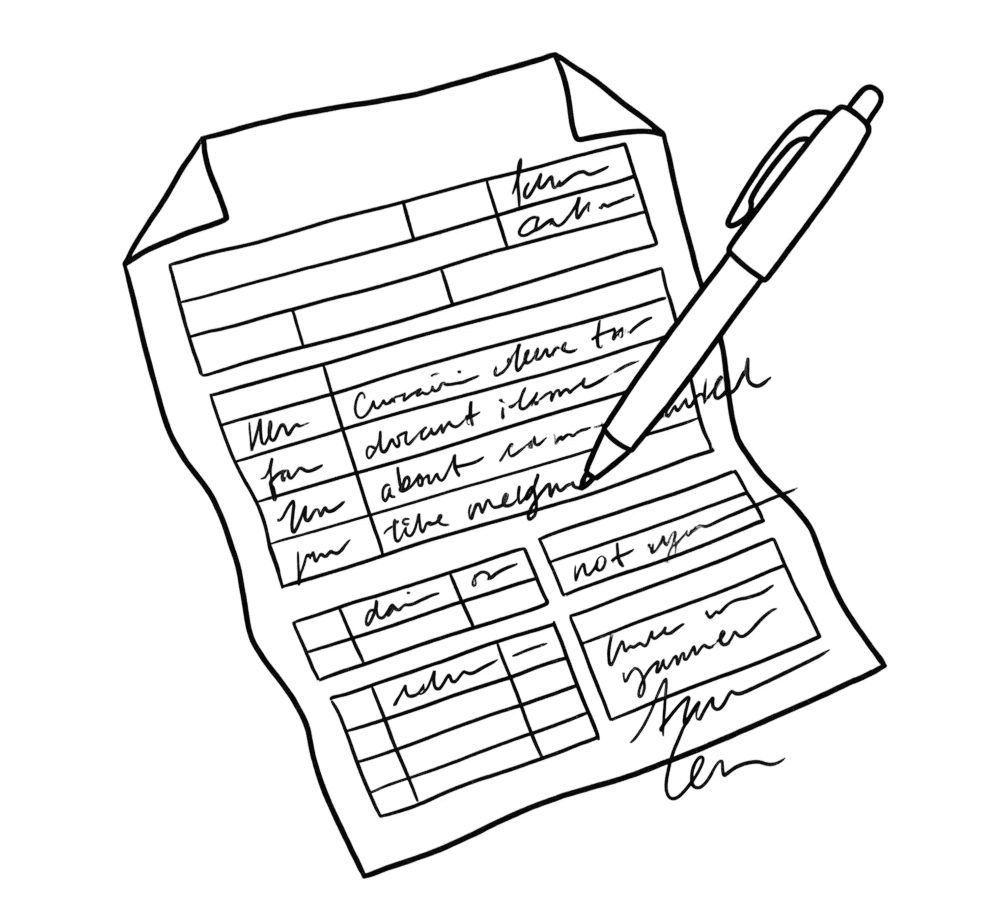
Recording tools created friction during live testing
Why?
Annotation sheets for recording were hard to follow in real-time, forcing teachers to find more space and spend extra time to complete.
Insufficient guidance undermined confidence

Why?
Teachers needed clearer training and support to administer tests consistently and effectively.
THE INSIGHT
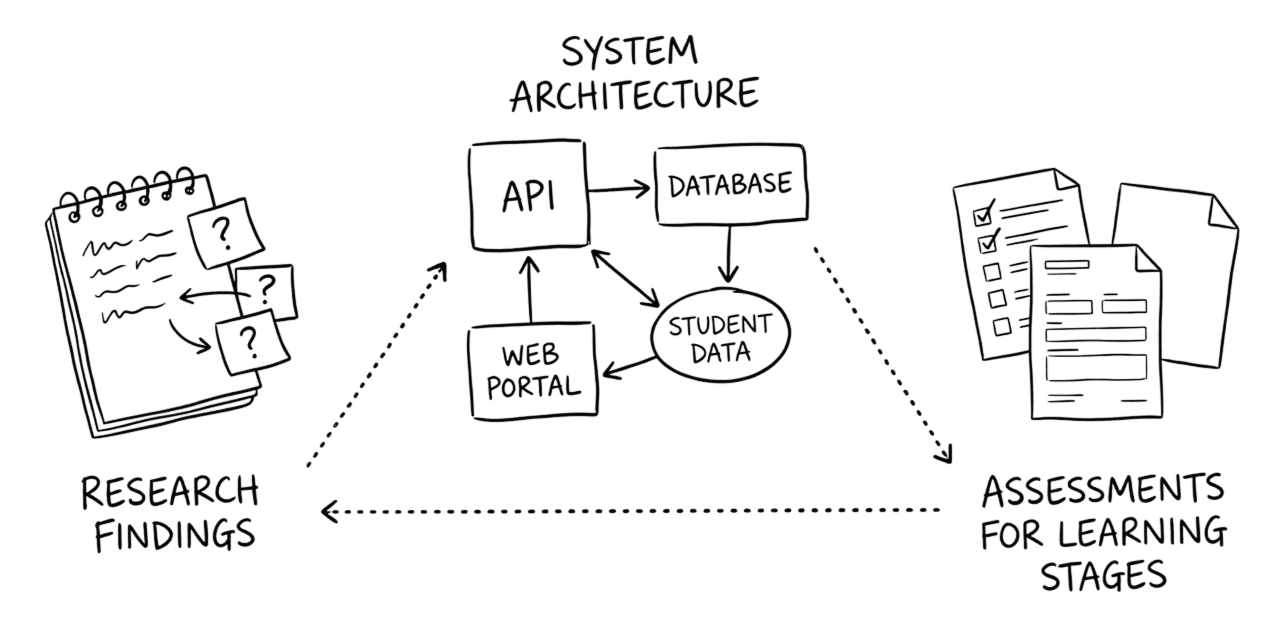
Connecting the Dots
HMW …
SOLUTION CONCEPT
Designing for Real Classroom Conditions
The four problems from the trial weren't isolated issues, they were interconnected friction points that compounded during live assessments. My design decisions aimed to reduce that friction while building in flexibility to test what actually worked for teachers and students in different school settings.
Decision No.1:
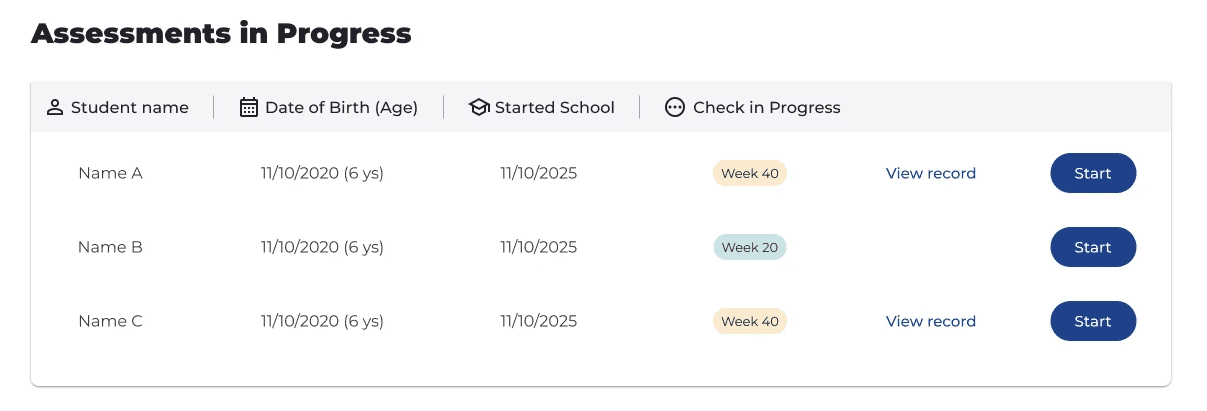
Supporting task decision through unified visibility
The identified opportunity guided me on showing key information about students test records at a glance to eliminate unnecessary manual tracking.
It surfaces:
Testings for this week and upcoming
Current phonics levels
Test results from past
Decision No. 2:
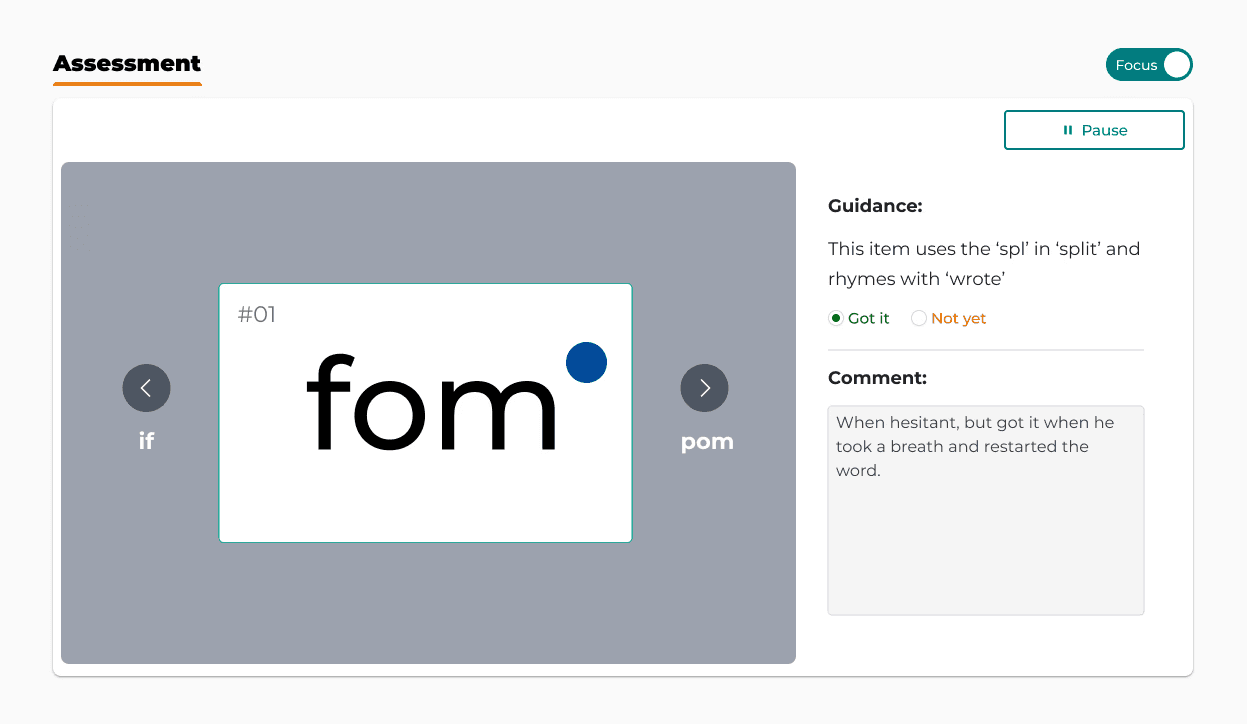
Reducing student frustration during testing
I added a pause function for two scenarios:
When student showed unwillingness to continue
When unexpected interruptions occurred (fire drills, emergencies)
The system captured the context and allowed teachers to resume within an hour without losing progress.
If a student made 5 consecutive errors, the assessment will be ended. This respected where the student was in their learning journey rather than creating unnecessary stress.
Decision No. 3:
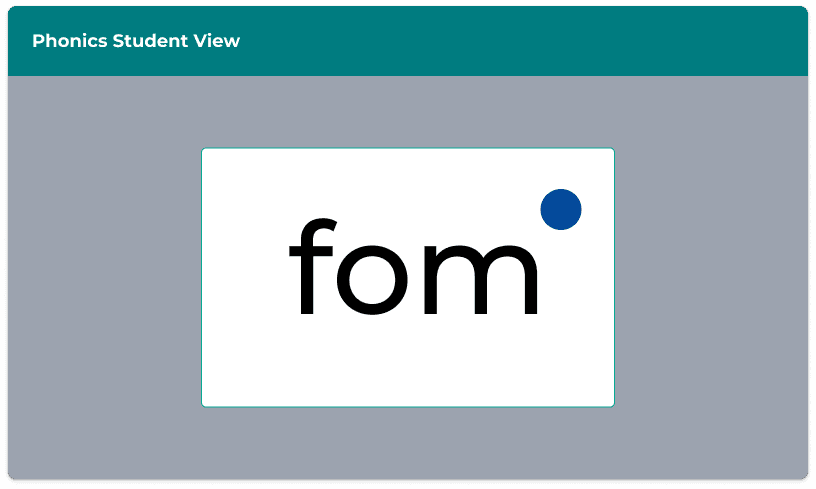
Keeping student focus on the task
Alien imagery confused younger students, but we still needed to indicate non-real words for decoding skills assessment. I replaced aliens with simple colored dots using the branding color - same function, no distraction.
Decision No. 4:
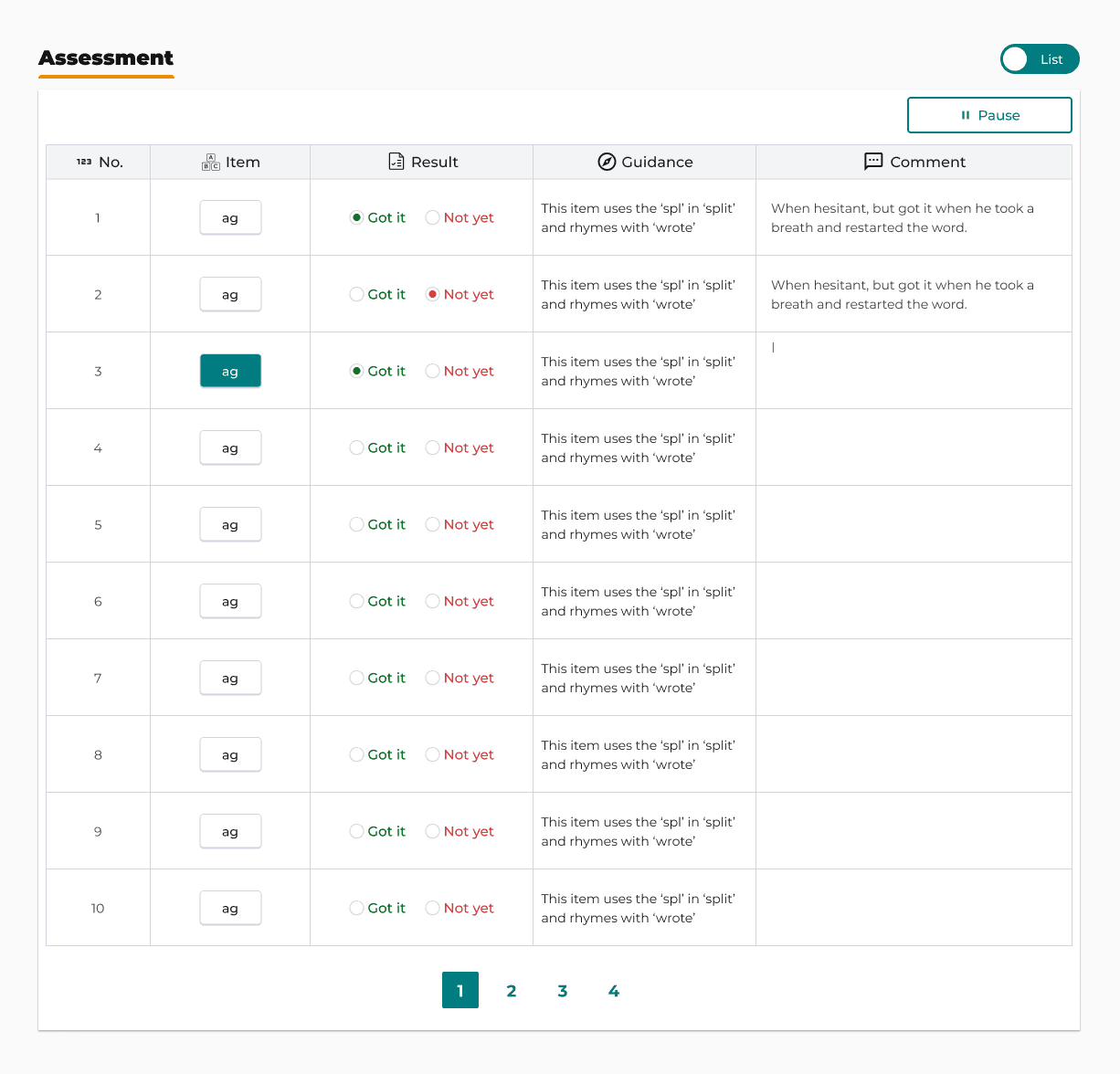
Reducing recording friction during live testings
Designed the annotation interface with embedded guidance for each word and responsive comment field to accommodate what teacher has to say.
Provided two test modes teachers could choose from: Focus mode (one word at a time to minimize distraction) and list mode (all words visible for holistic overview)
The strategic choice: design both bodes and let user testing reveal which worked better in real classroom, rather than assuming one approach fit all teaching styles.
Decision No. 5:
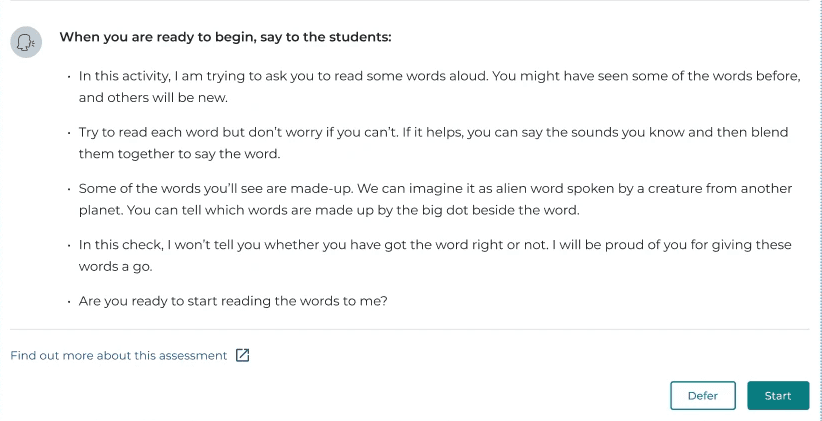
Building confidence through embedded guidance

Decision No. 6:
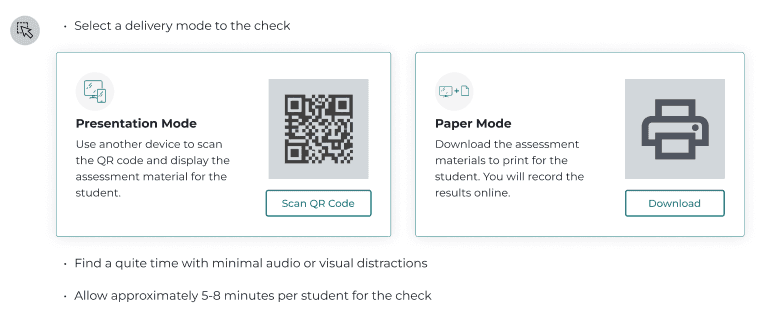
Adapting assessment to different school technology contexts
TESTING DIRECTION
This concept design focused on solving the core problems, so I kept visual details lightweight at this stage because the priority was testing whether these approaches actually worked in real classrooms.
Note on TeReo Māori Medium
REFLECTION & NEXT STEP
While we gained valuable vendor perspective during user journey definition, early involvement in concept design discussions would have strengthened technical alignment and make the testing focus on viable solutions. However, when their involvement became uncertain, we had to adjust quickly, keep the project moving forward but with future collaboration in mind.
Next Step
If I were able to continue working on this project, my next step was to:
run field tests with teachers to collect feedback for the next design iteration
bring the development team into design discussions to validate technical feasibility before or during testing
collaborate with curriculum team on refining recording or annotation instruction
consult with SMEs and branding team to ensure cultural integrity for Māori Medium contexts